Iowa's freeze-thaw cycle is the single biggest factor in choosing a patio material. What works perfectly in Texas or California may crack, heave, or deteriorate after a few Iowa winters. With ground temperatures in the Cedar Valley fluctuating between negative 20 and 95 degrees Fahrenheit throughout the year, the material you choose must handle repeated expansion and contraction without failing.
After more than 35 years of building patios and hardscapes across Waterloo, Cedar Falls, and the surrounding Cedar Valley, we have seen what holds up and what does not. Here is an honest comparison of the four most common patio materials for Iowa homes.
Interlocking Concrete Pavers
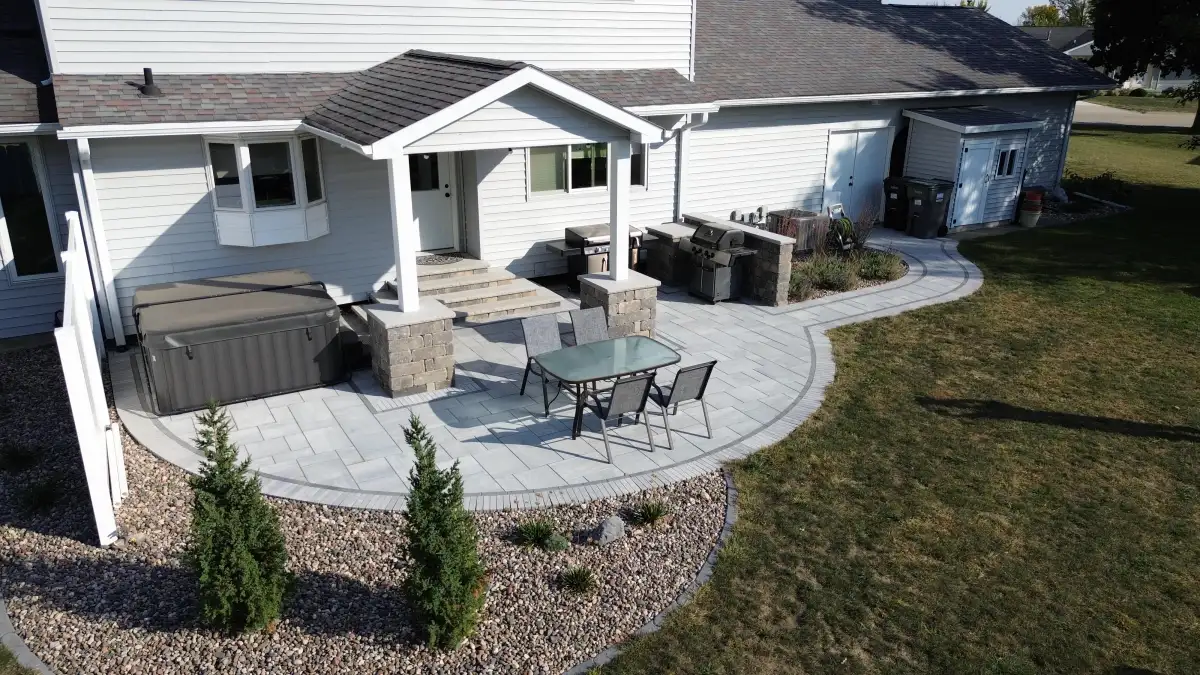
Interlocking pavers are the most popular patio material in Iowa for good reason — they are specifically engineered for freeze-thaw environments. Each paver is an individual unit that flexes independently with ground movement, rather than cracking like a monolithic slab.
Why Pavers Work Well in Iowa
- Freeze-thaw performance — Individual pavers accommodate ground movement without cracking. If frost heave displaces a section, the pavers can be reset without replacing the entire surface.
- Drainage — Polymeric sand joints allow controlled water drainage, reducing ice formation on the surface and hydrostatic pressure beneath it.
- Repairability — If a utility needs to be accessed or a paver cracks, individual units can be removed and replaced without disturbing the surrounding surface.
- Design flexibility — Multiple colors, textures, and patterns allow custom designs that complement your home's architecture and landscape design.
Considerations
Proper base preparation is essential for paver performance in Iowa. A minimum of 6 to 8 inches of compacted aggregate base is standard for Cedar Valley soil conditions. Skimping on the base is the most common reason paver patios fail — the pavers themselves are fine, but the ground beneath them moves unevenly because the base was inadequate. This is why professional installation matters more than the paver brand you choose.
Natural Stone
Bluestone, limestone, and granite are all viable patio materials in Iowa, but natural stone selection requires understanding which stones handle freeze-thaw cycles and which do not.
What Works
- Bluestone (thermal finish) — Dense, low-porosity stone that handles Iowa winters well. The thermal finish provides traction when wet or icy.
- Granite — Extremely dense and frost-resistant. More expensive but essentially maintenance-free for decades.
- Limestone (select grades) — Higher-density limestone varieties perform well, but softer grades can spall and flake after repeated freeze-thaw cycles. Grade matters significantly.
What to Avoid
Travertine and some sandstones are popular in warmer climates but are too porous for Iowa. They absorb water, which expands when frozen, causing surface spalling and structural degradation within a few seasons. If someone recommends travertine for your Iowa patio, ask about their experience with it specifically in freeze-thaw climates.
Installation Notes for Iowa
Natural stone can be set on a compacted aggregate base with polymeric sand joints (dry-set) or on a concrete slab with mortar joints (wet-set). In Iowa, dry-set installations generally outperform wet-set because they allow more flex with ground movement. Mortar joints can crack during freeze-thaw cycles, requiring more frequent maintenance.
Stamped Concrete
Stamped concrete is a single poured slab with surface patterns and colors applied before curing. It can mimic the look of stone, brick, or slate at a lower material cost than genuine natural stone.
The Iowa Reality
Stamped concrete has a mixed track record in Iowa. The material itself — concrete — handles freeze-thaw cycles, but the surface treatment and sealant are where problems emerge.
- Surface sealant maintenance — Stamped concrete requires resealing every 2 to 3 years to maintain its appearance and protect the color from UV fading and deicing salt damage. Skipping sealant applications leads to surface deterioration.
- Crack potential — Unlike pavers, a concrete slab is a single monolithic surface. Control joints are cut into the slab to direct where cracks form, but Iowa ground movement can still produce cracks in unexpected locations. Once cracked, repair is more visible and less seamless than with pavers.
- Deicing salt sensitivity — Salt-based deicers damage stamped concrete surfaces more aggressively than they affect pavers or natural stone. If you use salt on your driveway and it runs onto your patio, the stamped surface will deteriorate faster.
When Stamped Concrete Makes Sense
For covered or partially covered patios where exposure to direct precipitation and deicing products is limited, stamped concrete can be a cost-effective option. The key is setting realistic maintenance expectations upfront.
Flagstone
Flagstone refers to flat, irregularly shaped stones — typically sandstone, bluestone, or slate — laid in a natural pattern with either filled or open joints.
Dry-Laid Flagstone
Flagstone set on a compacted aggregate base with gravel-filled joints is a classic Iowa patio approach. The natural, organic look complements cottage-style and traditional homes. Dry-laid flagstone is forgiving with ground movement because each stone settles independently.
The tradeoff is surface levelness. Flagstone patios are inherently less uniform than pavers or stamped concrete, which affects furniture stability and can create trip hazards if stones shift significantly. Annual maintenance — resetting displaced stones, adding joint material — is part of owning a flagstone patio in Iowa.
Mortar-Set Flagstone
Flagstone can also be set on a concrete slab with mortar joints. This creates a more stable, level surface but introduces the same freeze-thaw challenges as stamped concrete — mortar joints can crack and require repair. This approach works best under covered structures like outdoor living spaces with a roof.
What We Recommend for Most Iowa Homes
For open-air patios in the Cedar Valley, interlocking concrete pavers with a properly prepared aggregate base are our standard recommendation. They deliver the best balance of aesthetics, durability, repairability, and long-term performance in Iowa's climate.
For homeowners who want the natural look of stone, dry-set bluestone or select limestone on a well-prepared base is an excellent choice — with the understanding that natural stone requires slightly more annual attention than pavers.
We install all four material types and will give you an honest assessment of what will perform best for your specific site, budget, and aesthetic goals during your consultation. No material is universally "best" — the right choice depends on your property's drainage, soil conditions, sun exposure, and how you plan to use the space.
Frequently Asked Questions
How long does a paver patio last in Iowa?
A professionally installed paver patio with proper base preparation typically lasts 25 to 30 years or more in Iowa. The pavers themselves can last indefinitely — it is the base and joint material that may need attention over time. We see patios we installed in the 1990s still performing well today.
Can I install a patio myself?
Small patios (under 100 square feet) are manageable DIY projects if you are willing to invest in proper base preparation. For larger patios, the base work — excavation, grading, compaction — requires equipment and experience that makes professional installation more practical and reliable. Inadequate base preparation is the number one cause of patio failure in Iowa.
When is the best time to install a patio in Iowa?
Late spring through early fall (May through October) is the installation season. Ground needs to be thawed and dry enough for proper excavation and compaction. We schedule patio projects starting in April for May installations, and our calendar fills quickly through summer. Early planning ensures you get your preferred timeline.
Ready to Plan Your Patio?
Every patio project starts with understanding your space — soil conditions, drainage patterns, existing landscape, and how you want to use the finished area. Schedule a consultation and we will walk your property, discuss material options, and give you an honest recommendation based on 35+ years of building hardscapes in the Cedar Valley.
Call (319) 226-6000 or request a consultation to get started.