
Landscape Lighting Ideas for Iowa Backyards
Landscape lighting is one of the most underutilized upgrades for Iowa homes. A well-designed lighting system extends the usability of your outdoor space by hours each evening, adds safety to walkways and stairs, improves home security, and dramatically changes the visual impact of your landscape after dark. For Iowa homeowners who invest in hardscaping, patios, and outdoor living features, lighting is what makes those spaces usable during the shorter days of spring and fall.
Here is a guide to the most effective landscape lighting ideas for Iowa backyards, along with practical considerations for our climate.
Types of Landscape Lighting Fixtures
Professional landscape lighting systems use a variety of fixture types, each designed for a specific purpose. The best lighting plans combine several types to create layered illumination that is both functional and atmospheric.
Path Lights
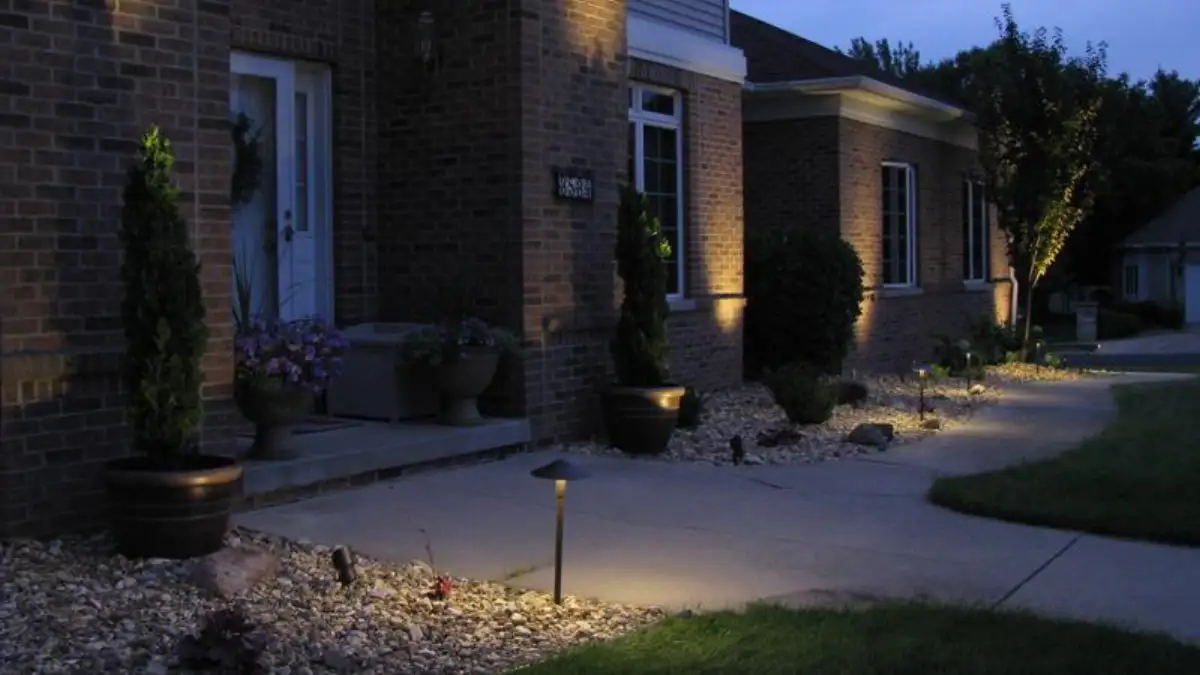
Path lights are the most recognizable landscape lighting fixture. They sit on short stakes along walkways, garden paths, and driveway borders, casting a pool of light downward to illuminate the walking surface. In Iowa, path lights serve a critical safety function during the months when darkness falls early. They prevent trips and falls on uneven surfaces, highlight grade changes, and guide visitors to your front door.
For the best visual effect, space path lights 8 to 10 feet apart and stagger them on alternating sides of the walkway rather than placing them in perfectly symmetrical rows. This creates a more natural, inviting appearance.
Uplights and Spotlights
Uplights are positioned at ground level and aimed upward to illuminate trees, architectural features, or textured walls. Spotlights are similar but produce a narrower, more focused beam. These fixtures create the dramatic effects that make a landscape come alive at night.
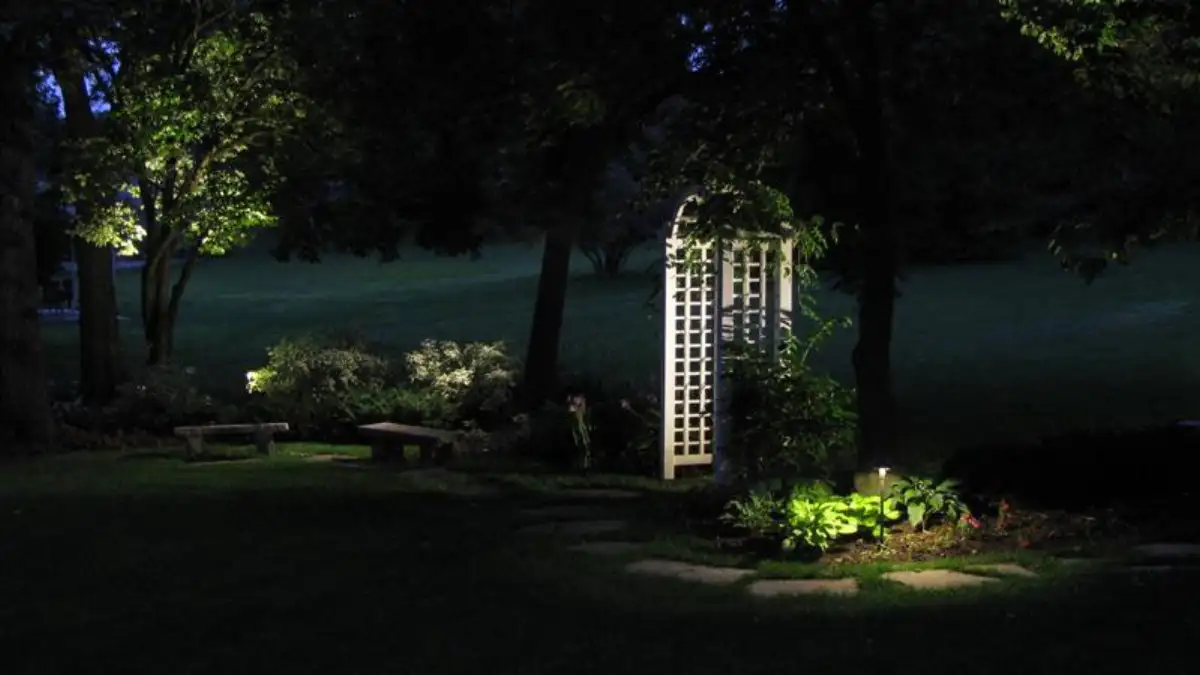
In Iowa, uplighting is particularly effective on mature deciduous trees. In summer, the light filters through the canopy and creates dappled shadows. In winter, the bare branch structure creates an entirely different but equally striking effect. Uplighting an oak or maple tree that has been growing for decades adds visual depth that you cannot achieve with any other type of fixture.
Downlights (Moonlighting)
Downlights are mounted high in trees or on structures and aimed downward to simulate the effect of moonlight filtering through branches. This technique, called moonlighting, produces soft, natural-looking illumination over large areas. It is particularly effective for Iowa backyards with mature tree canopies, creating gentle shadows on the ground below that shift when the wind moves the branches.
Step and Wall Lights
Recessed or surface-mounted lights built into retaining walls, seating walls, steps, and patio borders provide functional illumination exactly where grade changes occur. These fixtures are small and unobtrusive during the day but essential for safety after dark. For Iowa properties with multi-level patios, terraced retaining walls, or raised decks, step lighting is a necessary safety feature.
Hardscape Lights
These compact fixtures are designed to be integrated directly into hardscape structures. They can be recessed into the face of a retaining wall, built into the cap of a seating wall, or embedded in patio pavers. Hardscape lights provide accent illumination that highlights the texture and craftsmanship of stone and paver installations. They are a natural complement to any hardscaping project.
String Lights and Overhead Lighting
While not technically landscape lighting, overhead string lights or pendant fixtures on a pergola or covered patio are extremely popular for Iowa outdoor living spaces. They provide ambient light over dining and seating areas and create a warm, inviting atmosphere. Commercial-grade outdoor string lights with LED Edison-style bulbs have become a standard feature in outdoor living areas across the Cedar Valley.
Placement Strategies for Iowa Properties
Effective landscape lighting is about restraint and strategy, not flooding every surface with light. Here are the most impactful placement approaches for typical Cedar Valley properties:
Front Yard and Curb Appeal
- Uplight the facade of the house on either side of the front door to create a welcoming entrance
- Illuminate the front walkway with path lights from the driveway to the porch
- Spotlight one or two specimen trees or architectural features to add depth and dimension
- Downlight the address numbers or a planting bed near the street for visibility
Backyard and Patio Areas
- Light the perimeter of the patio with recessed hardscape lights or low-profile path lights
- Add task lighting near the grill or outdoor kitchen for safe food preparation
- Uplight two or three trees at the edges of the yard to define the space and create a sense of enclosure
- Install step lights on any grade changes between the patio, lawn, and garden areas
- Use wall-wash lights on a retaining wall or privacy fence to add texture and warmth
Driveways and Entrances
- Bollard lights or low path lights along the driveway edge guide vehicles and pedestrians
- Spotlights on columns, pillars, or entrance walls create a strong first impression
- Garage-adjacent lighting ensures safe transition from car to house during early winter darkness
LED Technology and Energy Efficiency
Modern landscape lighting systems use LED fixtures exclusively. LED technology has transformed outdoor lighting by reducing energy consumption by 75 to 80 percent compared to older halogen systems while producing equivalent or better light output.
Key advantages of LED landscape lighting for Iowa homeowners:
- Long lifespan — Quality LED fixtures last 40,000 to 50,000 hours, which translates to 15 to 20 years of typical use. This is important in Iowa because fixture replacement in frozen ground is not practical during winter months.
- Low heat output — LEDs produce very little heat, which means they can be placed close to plants without risk of heat damage. This also makes them safer near decks and combustible materials.
- Color temperature options — LED fixtures are available in warm white (2700K), neutral white (3000K), and cool white (4000K) color temperatures. For residential landscape lighting, 2700K to 3000K creates the most natural, inviting appearance.
- Low voltage — Most landscape lighting systems operate on 12-volt circuits powered by a transformer connected to a standard outdoor outlet. Low-voltage systems are safe to install, efficient to run, and do not require an electrician for the fixture wiring.
- Smart controls — Many LED systems include timers, dusk-to-dawn sensors, or smart home integration that allows you to adjust brightness, set schedules, and control zones from a smartphone. This is particularly useful in Iowa where sunset times vary dramatically between June and December.
Iowa-Specific Considerations
Landscape lighting in Iowa faces conditions that more temperate climates do not deal with. Here is what to account for:
- Freeze-thaw ground movement — Fixtures staked into the ground can heave upward during freeze-thaw cycles. Quality fixtures with deeper stakes and flexible wire connections handle this movement better than rigid installations.
- Snow coverage — Path lights and low fixtures may be buried under snow for weeks at a time. Choose fixtures tall enough to remain visible above typical snow depth, and use fixtures with sealed housings that handle prolonged moisture exposure.
- Seasonal daylight changes — In June, sunset in the Cedar Valley is after 8:45 PM. By December, it is before 4:45 PM. A lighting system with automatic timers or photocells adapts to these changes without manual adjustment.
- Wire burial depth — Low-voltage landscape lighting wire should be buried at least 6 inches deep in Iowa to avoid damage from aeration, gardening, and freeze-thaw cycles. Deeper burial protects the wire investment for decades.
When to Add Landscape Lighting
The ideal time to install landscape lighting is during a hardscaping or landscaping project, when the ground is already being excavated and wiring can be routed beneath patios, walkways, and planting beds. Retrofitting lighting to an existing landscape is entirely possible but involves more labor to bury wire and position fixtures without disturbing established installations.
If you are planning a patio, retaining wall, or outdoor living space, including lighting in the initial design is the most efficient approach. The wire runs are concealed during construction and the fixture placement is integrated with the overall design.
Ready to Light Up Your Outdoor Space?
Our team designs and installs landscape lighting systems that complement your home's architecture and landscape. Whether you are adding lighting to an existing property or incorporating it into a new project, we can help. Schedule a consultation with our team to discuss your vision.
Related: Landscape Lighting Services | Outdoor Living | Patio Installation