
What Should Come First?
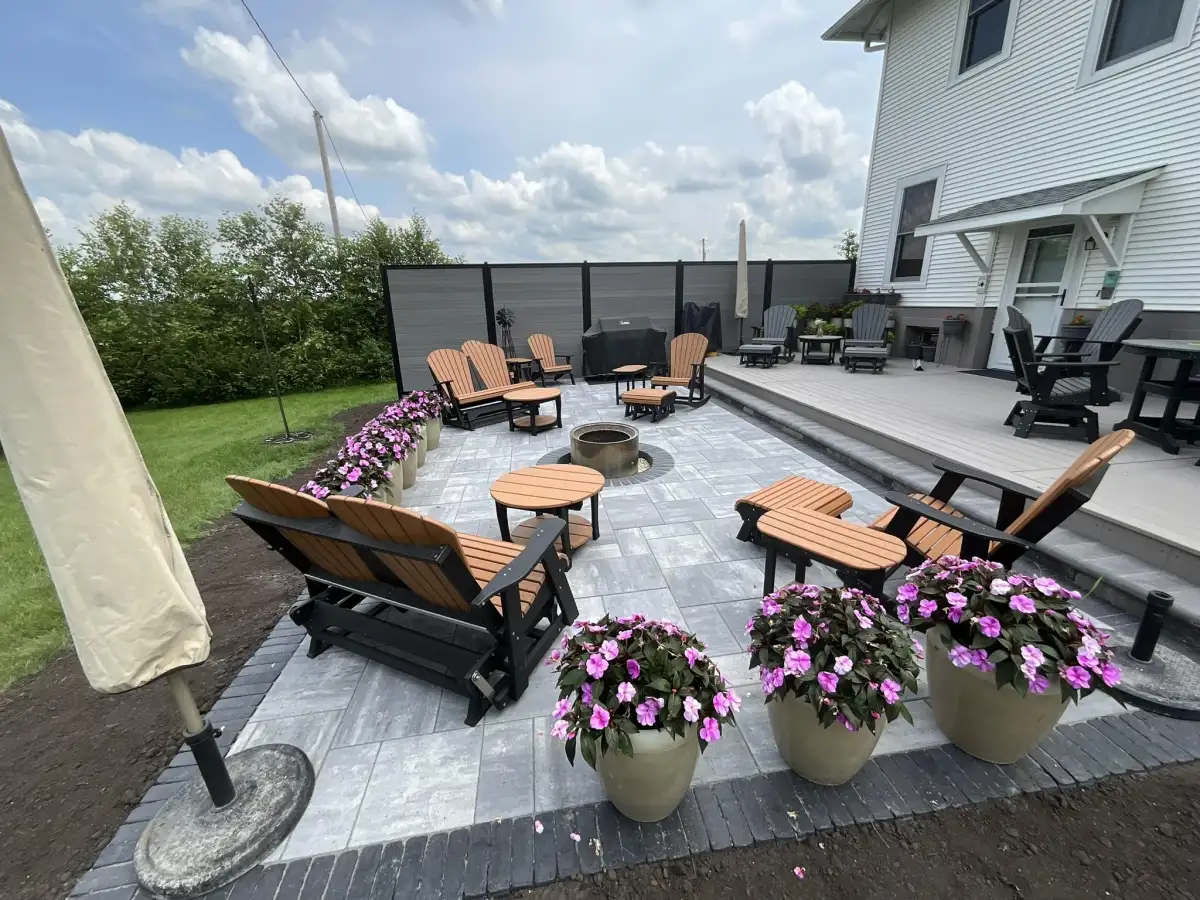
The order of work can affect cost and quality. Heavy hardscape work should usually happen before delicate planting. Grading and drainage should be handled before final lawn establishment. Lighting conduit is easier to coordinate while beds, walls, and patio edges are still being planned. If a future outdoor kitchen or fire feature is likely, it is better to plan around that now instead of disturbing finished beds later.
This is where broad landscaping and specific services overlap. A project might begin with hardscaping, continue with plantings and mulch, then finish with sod or hydroseeding around the access route. Ask your landscaper which parts are permanent infrastructure and which parts can be phased. That answer helps separate urgent functional work from upgrades that can wait.
How Should the Lawn Be Handled?
Many landscaping projects disturb or depend on the lawn. A new patio may need turf repair where equipment accessed the yard. A drainage correction may require regrading a low side yard. A front bed renovation may leave a clean edge that exposes thin grass. Newer Waterloo and Cedar Falls properties may need soil preparation before turf can establish well.
Ask whether the right solution is sod, hydroseeding, seeding, or a broader landscape maintenance plan. Sod gives a fast finished look in smaller or high-visibility areas. Hydroseeding can make sense for larger prepared areas. If shade, compaction, or drainage is the underlying issue, turf alone may not last. A helpful recommendation should explain why that lawn option fits the property conditions.
Discuss the Work Your Property Needs
For service scope and a property-specific consultation, see landscaping and lawn care in Waterloo and the Cedar Valley. Describe the conditions you have observed when you request a consultation.