
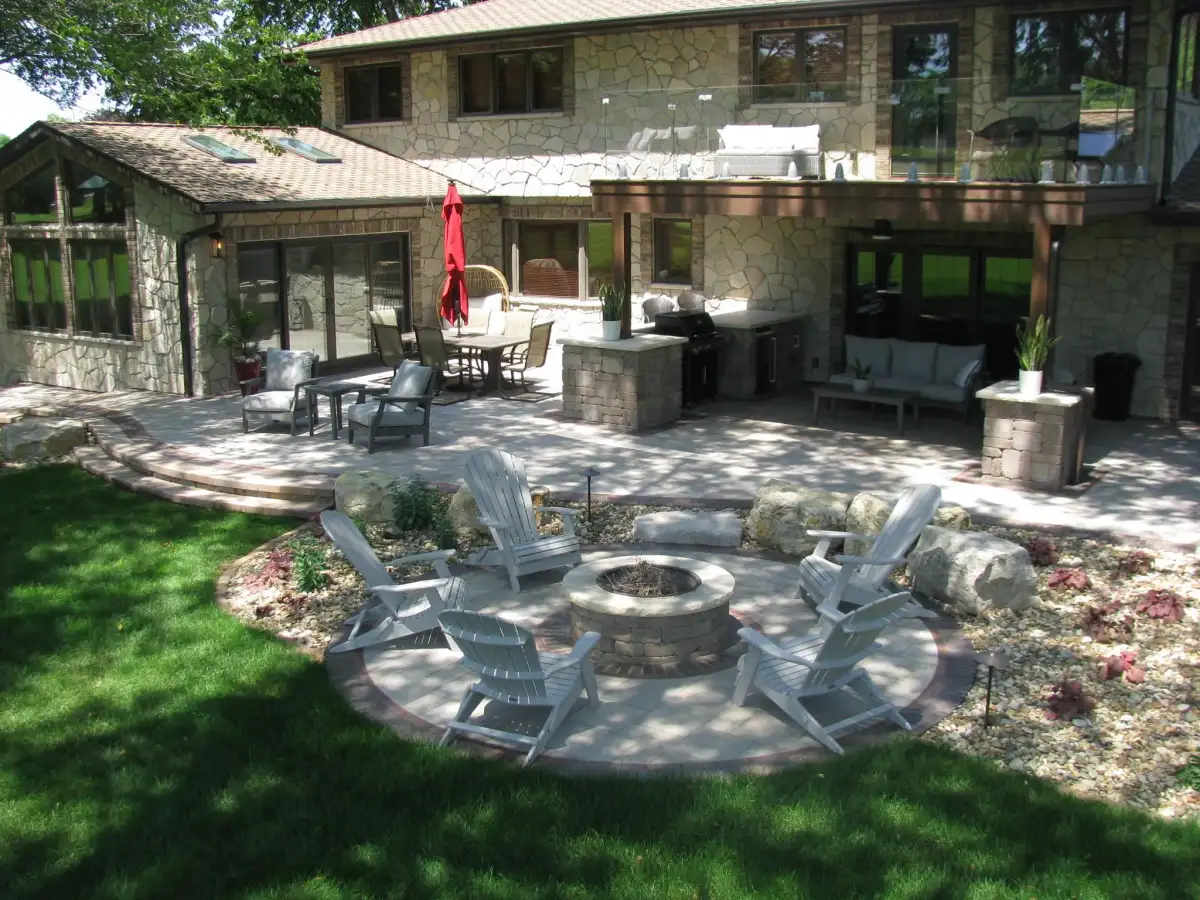
Booking landscape maintenance in Waterloo, IA starts with a simple question: what do you want the service to accomplish? “Lawn care” can describe routine mowing, a full property-maintenance plan, or help recovering turf that is thin, bare, or damaged. Those needs call for different schedules and different work.
Waterloo lawns also change through the season. Cool, wet spring conditions can drive fast growth, while summer heat and dry periods may slow it. Shade, drainage, gates, slopes, and the way a lawn connects to planting beds or hard surfaces all affect how a property should be maintained. Use these questions to compare the scope—not just the price—before service begins.
1. Does “lawn care” mean mowing or broader property maintenance?
Start by naming the work you actually need. Matthias Landscaping’s scheduled mowing service covers mowing at an appropriate height, string trimming around obstacles and beds, edging along sidewalks and driveways, and blowing clippings from hard surfaces. Broader landscape maintenance can involve bed care, mulch, seasonal cleanup, planting, or turf renovation.
This distinction keeps an estimate clear. A weekly mowing plan should not be assumed to include weed-control applications, extensive leaf removal, shrub pruning, or repair of damaged turf unless those items are specifically discussed. If the yard has several needs, ask whether they should be handled together or as separate seasonal services.
2. Is weekly or bi-weekly mowing the right schedule?
Frequency should match growth, not just a recurring date on the calendar. During active spring growth, waiting too long between cuts can mean removing too much of the grass blade at once. When growth slows during a hot or dry stretch, the same frequency may no longer fit the lawn.
Ask how weekly and bi-weekly options are evaluated and what happens when conditions change. The useful answer should account for the grass height, current weather, and how the property looks between visits. It should also explain whether a lawn that is already overgrown needs a different first visit before settling into routine service.
3. What happens during every visit?
A consistent checklist makes it easier to compare providers. Confirm that the quoted service explains mowing, trimming, edging, and hard-surface cleanup separately. A lawn can be evenly cut and still look unfinished if grass remains high around a mailbox, fence line, tree, patio edge, or planting bed.
Ask whether edging is performed along both sidewalks and driveways, how clippings are handled, and which areas are excluded. If part of the yard is separated by a fence or narrow access point, make sure that section is included in the scope rather than assuming the crew can reach it.
4. How are rain and wet ground handled?
Rain does more than interrupt a mowing route. Saturated soil can rut under equipment, and mowing wet grass can produce an uneven finish or heavy clumps. A low spot that stays soft long after the rest of the yard dries may also signal a grading or drainage issue.
Before booking, ask how weather delays are communicated and how the crew decides when the ground is ready. Point out downspout outlets, drainage paths, and consistently wet areas during the first conversation. For a Waterloo property, that information is especially useful during spring rain and after snowmelt.
5. What should the crew know about access and obstacles?
Walk the property before requesting an estimate and note anything that changes how equipment moves through the yard. Important details include gate widths and locks, pets, play equipment, irrigation heads, landscape lighting, exposed roots, steep slopes, retaining-wall edges, and small lawn panels separated by beds or walks.
These details are not minor. They help determine how much of the work can be completed with mowing equipment, where string trimming is required, and whether the crew needs specific entry instructions. Clear access information also helps prevent a schedule from being built around assumptions that do not fit the property.
6. Is routine mowing enough for thin, bare, or damaged turf?
Mowing maintains established grass; it cannot solve every underlying lawn problem. Repeated bare areas may be connected to shade, compacted soil, poor drainage, heavy foot traffic, pets, salt exposure, or disturbance from construction. If the same patch fails repeatedly, it is worth identifying the cause before adding more seed.
Larger repairs may call for sod installation or hydroseeding after the soil and grade are prepared. The better choice depends on the size of the area, slope, water access, timing, and how quickly the surface needs to be established. Ask for the repair to be evaluated separately from the maintenance schedule.
7. How will lawn care coordinate with beds and seasonal work?
The mower line is only one part of the finished property. Bed edges, low branches, mulch, leaves, and transitions to patios or walkways all influence how the lawn looks after a visit. If you also need spring cleanup, fall leaf removal, mulch, or bed maintenance, clarify how those services fit into the calendar.
Coordination is also important when a larger outdoor project is planned. Drainage corrections should happen before damaged turf is replaced. New bed lines should leave practical mowing paths. Sod should not be installed where equipment will need access for a later patio or retaining wall. Sharing the full plan can prevent one improvement from being disturbed by the next.
8. What information belongs in the estimate request?
A useful request should identify the service address, the lawn areas involved, current condition, preferred timing, and whether you are looking for mowing only or broader property care. Include gate and pet instructions, wet or steep areas, obstacles, and any turf damage you want evaluated.
Photos can make narrow access, bare patches, overgrowth, or drainage concerns easier to explain. You do not need to diagnose the yard yourself. A clear description simply helps Matthias Landscaping determine whether the next conversation should focus on routine mowing, turf repair, or a more complete landscape solution.
FAQ: Booking Lawn Care in Waterloo
What is included in a typical Matthias Landscaping lawn care visit?
Scheduled mowing service includes mowing at an appropriate height, string trimming around obstacles and landscape beds, edging along sidewalks and driveways, and blowing clippings from hard surfaces.
Is weekly or bi-weekly lawn care better in Waterloo?
The right frequency depends on active growth, weather, turf condition, and the amount of grass that can be removed without stressing the lawn. Ask how the schedule will adjust during rapid spring growth and slower summer periods.
What property details should I share before requesting a lawn care estimate?
Share the service address, approximate lawn areas, preferred timing, gate and pet instructions, obstacles, steep or wet areas, irrigation components, and any bare or damaged turf that may need more than mowing.
Can routine lawn care fix bare spots or areas that stay wet?
Routine mowing can maintain established turf but does not correct recurring drainage, compaction, shade, or soil problems. Bare or damaged areas may need site correction, sod, hydroseeding, or broader landscape work.
Ready to discuss your property? Contact Matthias Landscaping Co. with the address, preferred schedule, lawn condition, and access details, or call (319) 226-6000.