
Outdoor Kitchen Planning Guide for Iowa Homeowners
An outdoor kitchen transforms how you use your backyard. Instead of running between the indoor kitchen and the patio every time you grill, everything is within arm's reach: the grill, counter space, storage, and seating. For Iowa homeowners, outdoor kitchens have become one of the most popular outdoor living additions over the past decade. The key is designing one that works with Iowa's climate rather than against it.
Here is what you should think through before breaking ground on an outdoor kitchen in the Cedar Valley.
Location and Layout
Where you place your outdoor kitchen determines how much you use it. The best location balances convenience, wind protection, and proximity to your indoor kitchen.
Adjacent to the House
Most outdoor kitchens in Iowa are built on a patio adjacent to the home, typically accessible through a back door, sliding door, or French doors. This placement makes it easy to carry food, dishes, and supplies back and forth. It also allows you to run gas and water lines from the home's existing systems without extensive underground work. The house wall provides a natural windbreak on one side, which matters on Iowa's breezy spring and fall evenings.
Freestanding Island Kitchens
A freestanding outdoor kitchen built away from the house, perhaps near a pool area or at the edge of a patio, creates a more distinct gathering space. This layout works well for larger properties where the backyard can accommodate multiple zones. The tradeoff is that utility connections require longer runs, and the kitchen is more exposed to wind and weather without the house as a buffer.
L-Shaped and U-Shaped Layouts
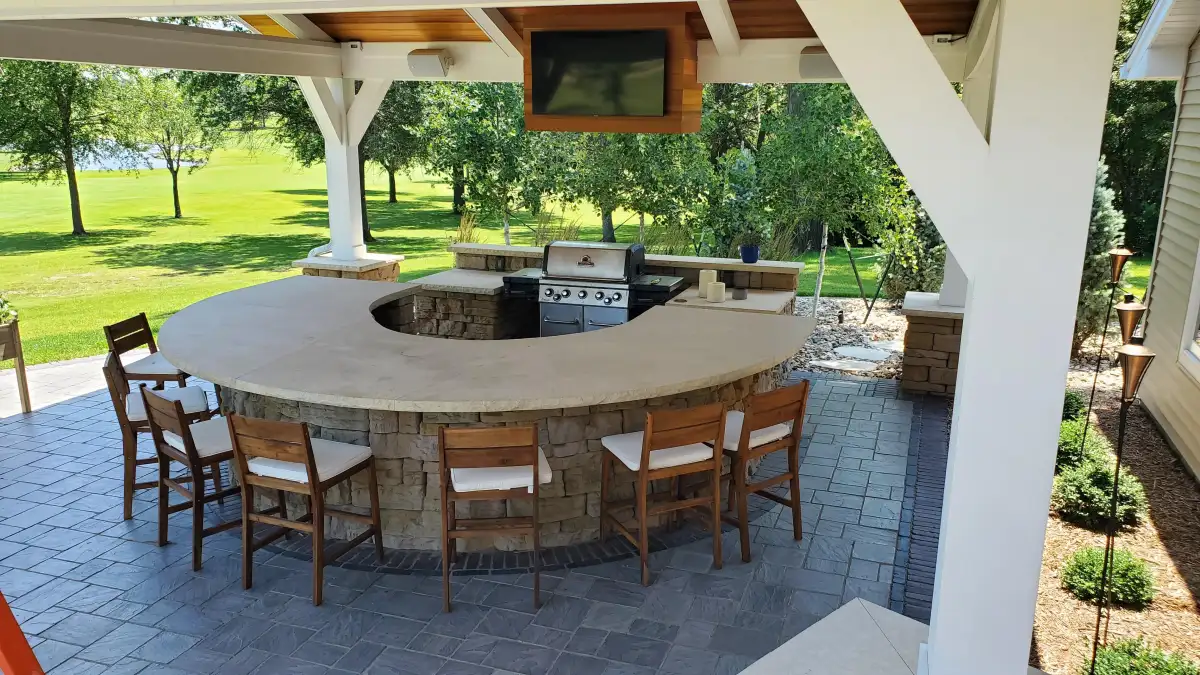
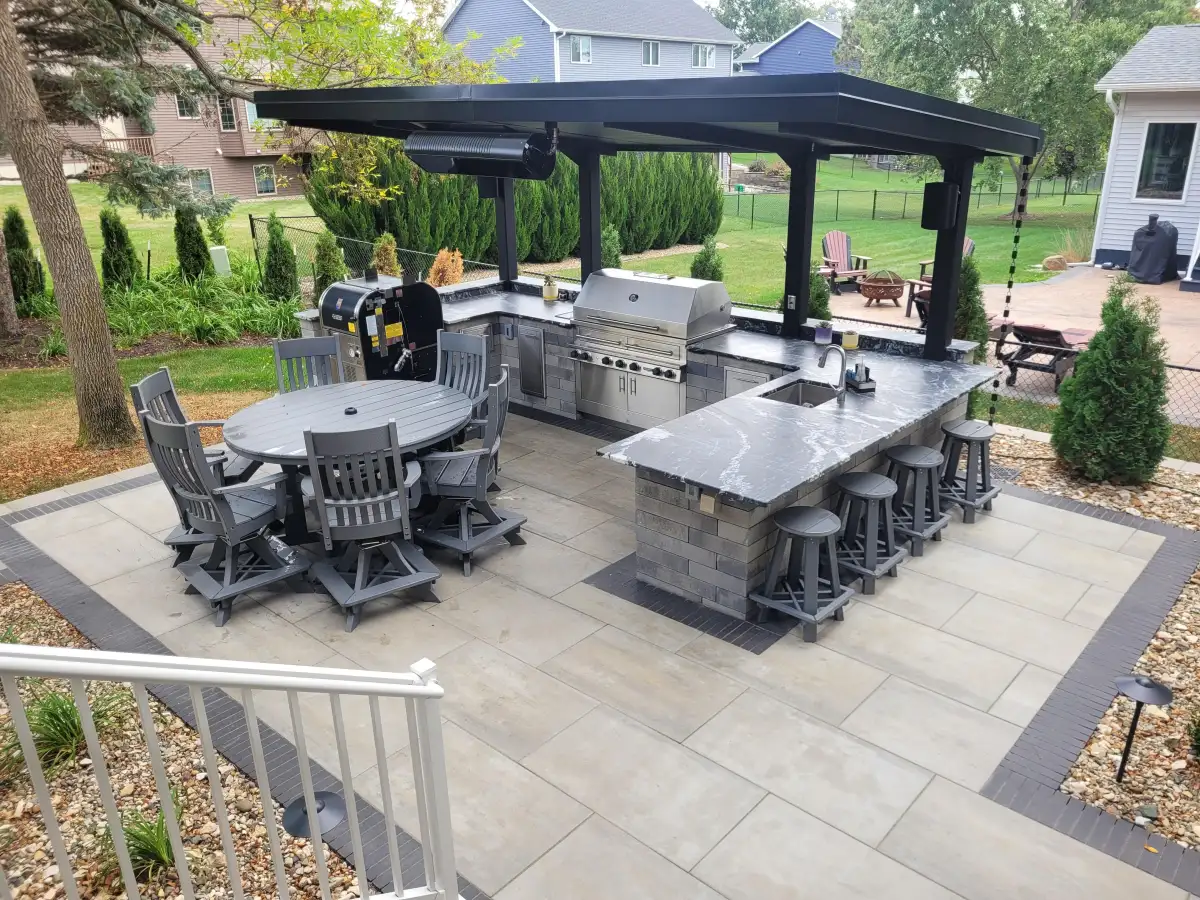
L-shaped kitchens wrap around a corner, giving the cook more counter space and creating a natural gathering point. U-shaped kitchens add a third section, often with a bar-height counter where guests can sit and face the cook. Both layouts keep everything within a few steps and create an efficient workflow similar to an indoor kitchen triangle.
Materials That Survive Iowa Winters
Material selection is arguably the most important decision for an Iowa outdoor kitchen. Everything you install will endure temperatures from negative 20 to over 95 degrees, heavy rain, snow, ice, and direct sunlight. Materials that perform well in milder climates can crack, fade, or deteriorate quickly in the Midwest.
Base Structure
The most durable outdoor kitchen bases are built from concrete block or steel framing, then faced with natural stone, manufactured stone veneer, or matching hardscape block. Concrete block provides thermal mass and structural rigidity. Steel framing is lighter and easier to configure for custom shapes. Both must be finished with weather-rated exterior materials. Avoid wood framing in Iowa unless it is pressure-treated and fully wrapped in a waterproof membrane.
Countertops
Outdoor countertop materials need to handle freeze-thaw cycles, UV exposure, and food prep. The most popular options include:
- Granite — Naturally weather-resistant and available in a wide range of colors. Sealed granite handles Iowa winters well and provides a premium look.
- Concrete — Custom-poured concrete countertops can be shaped to any dimension and stained to match your design. They must be sealed properly to prevent water absorption and freeze damage.
- Porcelain tile — Large-format porcelain with very low water absorption rates performs well in Iowa. It resists staining, UV fading, and thermal shock.
- Natural stone slab — Bluestone, limestone, or quartzite slabs offer a one-of-a-kind appearance. Ensure the stone is rated for exterior use in cold climates.
Flooring
The outdoor kitchen should sit on a properly installed paver patio or a reinforced concrete pad. Pavers are the preferred choice for most Cedar Valley outdoor kitchens because they flex with ground movement during freeze-thaw cycles. The patio base must be compacted aggregate deep enough to support the combined weight of the kitchen structure, appliances, and countertops.
Appliances and Features
The appliances you include depend on how you cook and how often you plan to use the space. Start with the essentials and leave room to add features later if desired.
Essential Features
- Built-in grill — The centerpiece of most outdoor kitchens. Natural gas grills connected to your home's gas line eliminate the need for propane tank refills. Look for grills rated for outdoor installation with stainless steel construction.
- Counter space — At minimum, plan for 24 inches of counter on each side of the grill for food prep and plating. More is better.
- Storage — Stainless steel doors and drawers below the counter keep utensils, charcoal, and supplies organized and protected from weather.
Popular Additions
- Outdoor refrigerator — A compact undercounter refrigerator keeps drinks and perishables cold without trips inside. Choose a unit rated for outdoor use in cold climates.
- Sink with running water — A small sink makes food prep and cleanup much more convenient. It requires a water supply line and a drain line, so plan the plumbing during the design phase.
- Side burner — Useful for sauces, side dishes, and anything that needs a stovetop rather than a grill grate.
- Pizza oven — Wood-fired or gas-fired pizza ovens have become increasingly popular. They add a dramatic focal point and expand what you can cook outdoors.
- Bar seating — A raised countertop section with stools lets guests sit and socialize while the cook works. This is one of the most used features in outdoor kitchens we build.
Iowa Climate Considerations
An outdoor kitchen in Iowa is a seasonal space. The active cooking season typically runs from April through October, though a covered or partially enclosed kitchen can extend that window into early November. Here are climate-specific factors to plan for:
- Wind protection — Iowa is windy, particularly in spring and fall. A partial wall, pergola with screens, or strategic placement against the house helps shield the cooking area from wind that can affect grill performance and comfort.
- Shade and cover — A pergola, roof extension, or retractable awning provides shade during summer and keeps light rain off the cooking area. In Iowa, a covered outdoor kitchen gets used significantly more than an uncovered one.
- Winterization — Water lines must be drained before the first hard freeze. Gas lines can remain connected year-round. Appliances should be covered with weather-rated covers when not in use during winter months. Stainless steel components hold up well to Iowa winters if they are cleaned and covered properly.
- Lighting — Iowa summer evenings are long, but by September, it gets dark by 7:30. Landscape lighting around the outdoor kitchen is essential for safe food prep and extending the cooking season into fall evenings. Undercounter task lighting, overhead pendant lights, and pathway lighting all contribute to a functional outdoor kitchen after dark.
Integrating with Your Overall Outdoor Space
An outdoor kitchen works best when it is part of a larger outdoor living plan rather than an isolated addition. Consider how the kitchen relates to your dining area, seating zone, fire feature, and landscape. A cohesive design plan ensures proper traffic flow, adequate space between zones, and a unified material palette that ties everything together.
Starting with a custom landscape design that maps out the entire outdoor space prevents the piecemeal approach that often results in cramped layouts, mismatched materials, and wasted space.
Ready to Plan Your Outdoor Kitchen?
If you are considering an outdoor kitchen for your Cedar Valley home, our team can help you design a space that matches how you cook, entertain, and live outdoors. We have been building outdoor living spaces across northeast Iowa since 1991. Schedule a consultation to get started.
Related: Outdoor Living | Hardscaping | Landscape Lighting