
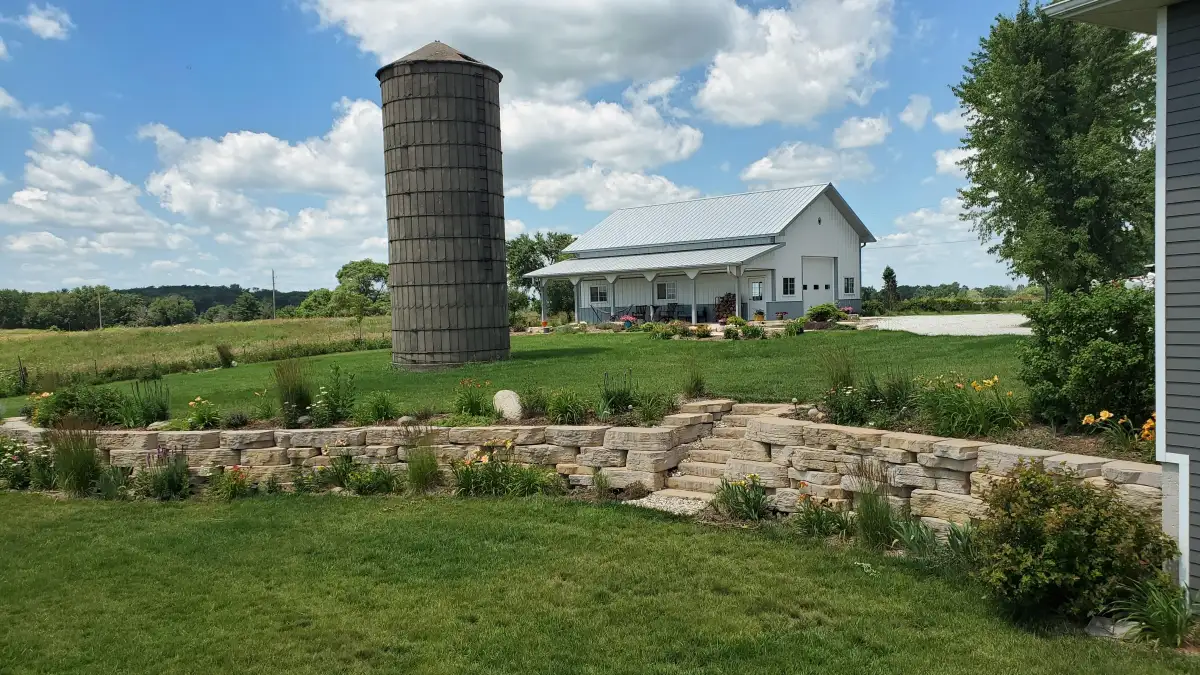
What to Know Before Building a Retaining Wall in Iowa
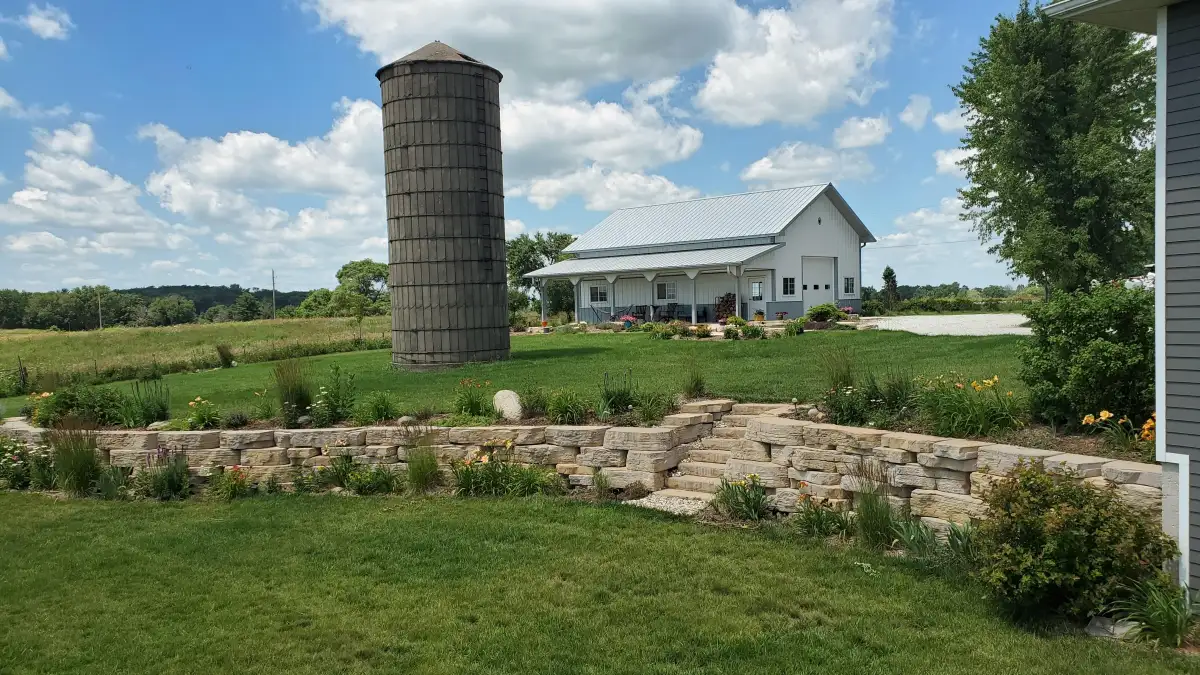
Retaining walls are one of the most practical and visually impactful additions you can make to an Iowa property. They solve grading problems, prevent erosion, create usable space on sloped lots, and add real structure to a landscape design. But building a retaining wall in Iowa involves more than stacking blocks. The state's soil conditions, freeze-thaw cycles, and local building codes all influence how a wall should be designed and installed.
If you are considering a retaining wall for your property in the Cedar Valley, here is what you should understand before the project begins.
Iowa Soil Conditions Affect Every Retaining Wall
Northeast Iowa sits on some of the heaviest clay soil in the Midwest. This clay expands significantly when it absorbs water and contracts when it dries out. That expansion and contraction cycle creates lateral pressure against the back of a retaining wall, and if the wall was not engineered to handle that pressure, it will lean, crack, or fail within a few years.
Proper retaining wall construction in Iowa starts with understanding the specific soil on your property. A clay-heavy site requires a deeper excavation, a thicker layer of compacted aggregate base, and a robust drainage system behind the wall face. Drainage aggregate, typically clean crushed stone, is placed behind the wall blocks from the base course to within a few inches of the top. A perforated drain pipe at the base of the wall collects water and directs it to a discharge point away from the structure.
Without these drainage measures, hydrostatic pressure builds behind the wall during Iowa's wet springs and can push even a well-built wall out of alignment. This is one of the most common failure points we see in walls that were installed without professional engineering.
Freeze-Thaw Cycles and Wall Durability
Iowa winters bring temperatures well below zero, and the ground freezes to depths of 36 to 42 inches in the Cedar Valley. When water trapped in the soil behind a retaining wall freezes, it expands and pushes against the wall face. When it thaws, the soil settles unevenly. This cycle repeats dozens of times each winter.
To withstand this, a retaining wall needs a base course that sits below the frost line or on a compacted aggregate pad deep enough to distribute the load. The base aggregate itself must be angular, not rounded, so it locks together and does not shift. Geogrid reinforcement, a high-strength polymer mesh that ties the wall face to the retained soil, is critical for walls over three feet in height. Geogrid distributes lateral forces across a much wider area, preventing the kind of localized failure that topples unreinforced walls.
Permit Requirements in Iowa
Building permits for retaining walls vary by municipality in Iowa. In Waterloo, a permit is generally required for retaining walls over four feet in height as measured from the base of the footing to the top of the wall. Cedar Falls, Waverly, and other Cedar Valley communities have similar thresholds, though the specifics can differ.
Walls that require a permit typically also require engineered plans showing the wall design, drainage system, soil conditions, and setback distances from property lines and structures. Some municipalities require a site inspection before backfill. Working with a contractor who understands these local requirements saves time and avoids the risk of building a wall that does not meet code, which could require costly removal and rebuilding.
Material Options for Iowa Retaining Walls
The most common retaining wall materials used in northeast Iowa include:
- Segmental retaining wall (SRW) blocks — Manufactured concrete blocks designed to interlock without mortar. Available in a wide range of textures and colors. The most popular choice for residential walls due to their durability and design flexibility.
- Natural stone — Limestone, granite, and fieldstone create a distinctive, organic look. Natural stone walls require skilled installation but offer unmatched aesthetic character. They work well for both structural and decorative applications.
- Poured concrete — Used primarily for structural applications where height or load-bearing capacity demands it. Poured walls can be faced with stone veneer for a finished appearance.
- Timber — Pressure-treated landscape timbers are sometimes used for shorter walls, but they have a limited lifespan in Iowa's wet climate. Most professionals recommend block or stone for walls expected to last more than 10 to 15 years.
The material choice affects not just the appearance of the wall but also its structural requirements. SRW blocks are engineered with specific weight, dimensions, and interlock geometries that make design calculations straightforward. Natural stone walls require more skilled craftsmanship and often need additional structural reinforcement to achieve the same performance.
What Affects the Scope of a Retaining Wall Project
Every retaining wall project is different, and several factors determine the overall scope and complexity:
- Wall height — Taller walls require deeper bases, more drainage infrastructure, and geogrid reinforcement. A two-foot decorative wall is a fundamentally different project than a six-foot structural wall.
- Wall length — Longer walls require more material, more excavation, and more careful attention to drainage along the entire run.
- Site access — Properties where equipment can drive directly to the work area are more efficient than sites where materials must be carried by hand around structures or through narrow gates.
- Soil conditions — Heavy clay, high water tables, or unstable fill soil all increase the engineering requirements.
- Surcharge loads — Walls that retain slopes with driveways, pools, or structures above them must account for the additional weight bearing down on the retained soil.
- Terracing — On steep slopes, a series of shorter terraced walls is often more practical and visually appealing than a single tall wall.
Why Professional Installation Matters in Iowa
A retaining wall is a structural element. Unlike a planting bed or mulch ring, a wall that fails can cause real damage to your property, your neighbors' property, and anything downhill from the retained soil. Iowa's clay soils and freeze-thaw cycles make professional engineering and installation especially important.
Professional installation means proper excavation to the correct depth, compacted base preparation, engineered drainage, geogrid reinforcement where required, and block placement to manufacturer specifications. It also means understanding local permit requirements and building to code without cutting corners. A wall built correctly will last 25 years or more. A wall built incorrectly may not survive its second winter.
Ready to Discuss Your Retaining Wall Project?
If you are considering a retaining wall for your property in Waterloo, Cedar Falls, or anywhere in the Cedar Valley, our team can help you understand what the project involves and how to approach it. We have been building retaining walls across northeast Iowa since 1991, and our experience with local soil conditions and building codes means your wall will be built to last. Schedule a consultation with our team to get started.
Related: Hardscaping Services | Landscape Design