
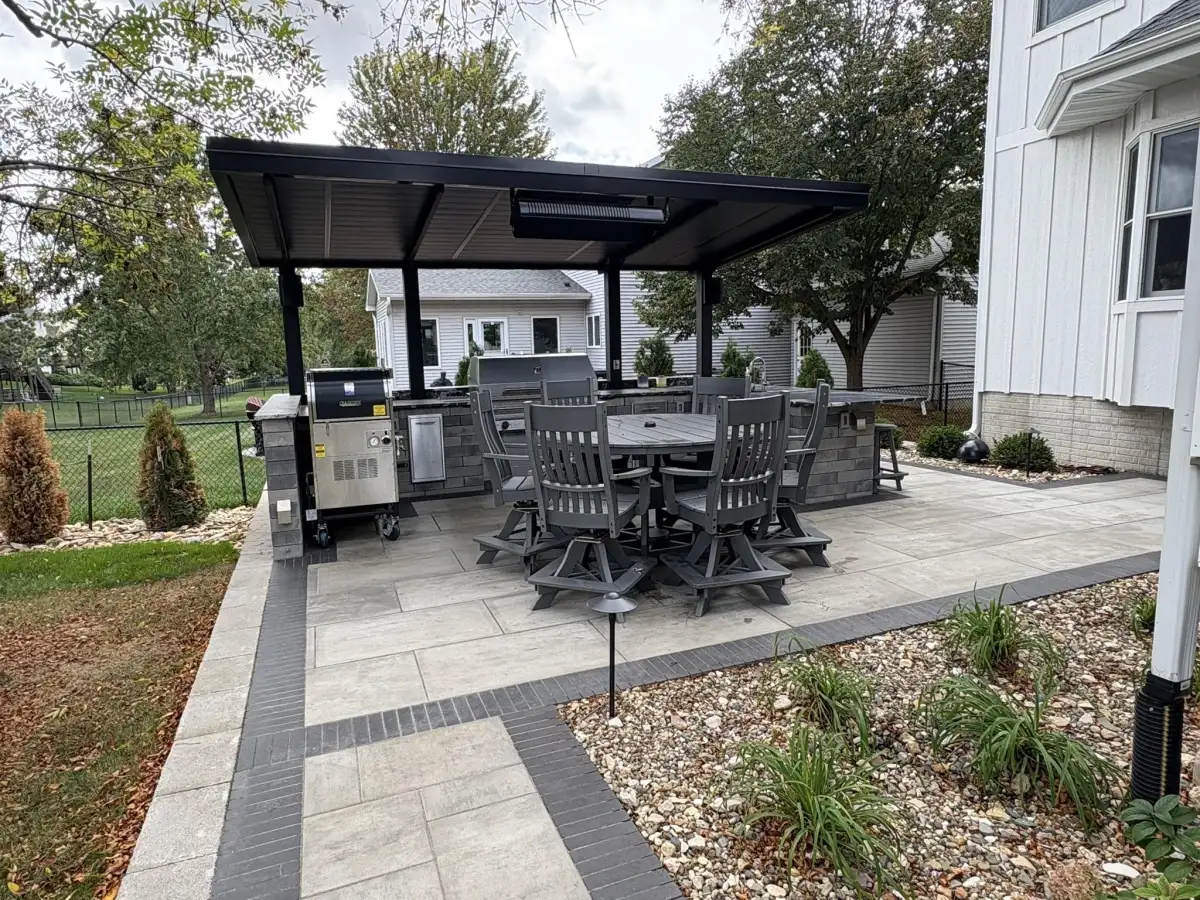
A landscaping proposal can look complete because it names a patio, a retaining wall, new planting beds, or turf. To compare it well, look one level deeper: does the proposal explain how the work responds to the yard, what preparation supports it, and who is responsible for the details around it?
That distinction matters in Waterloo, where an outdoor project may need to account for grade changes, stormwater, soil conditions, freeze-thaw movement, mature trees, narrow access, and the way several landscape features meet. Use the questions below to turn an appealing idea into a scope you can understand and compare.
1. Are we discussing installation, ongoing care, or both?
“Landscaper” can describe several kinds of work. One homeowner may need a new layout and installation; another may need recurring care for established beds; a third may want a larger project followed by seasonal maintenance. Ask which part of the need the proposal covers.
Matthias Landscaping separates landscape installation and property improvements from Landscape Maintenance. If the project changes how several outdoor areas work together, landscape design may also need to come before final installation choices. Clarifying that service path prevents an estimate for one type of work from being mistaken for another.
2. What did the property review reveal?
The proposal should reflect the actual site, not only the feature you requested. Ask what the landscaper observed about slope, water movement, soil, sun and shade, existing plants, roots, utilities, structures, and equipment access. Then ask which parts of the recommendation changed because of those observations.
Water movement deserves a specific answer when work changes grade or adds hard surfaces. The City of Waterloo publishes stormwater information for residents and construction activity. Your conversation should identify how finished grades, paved areas, walls, and planting beds are intended to handle rainfall, plus any project-specific requirements that still need confirmation.
3. Which decisions must be settled before the price is firm?
Ask which details are fixed in the proposal and which are allowances or later selections. Patio dimensions, wall height, demolition quantities, base preparation, plant counts, material choices, lighting quantities, and lawn restoration can all change the scope. A proposal should make those decision points visible.
This is also where a design earns its value. When hardscaping, planting, lighting, drainage, or future outdoor features meet, the layout and elevations can affect several cost items at once. Settling the relationship between those elements is often more useful than choosing a surface color first.
4. Can I trace the estimate from preparation through cleanup?
A total is easier to evaluate when you can follow the work in order. Depending on the project, the written scope may address removals, excavation, grading, drainage components, base or soil preparation, materials and plants, installation, hauling, cleanup, and restoration of disturbed areas.
Ask what is excluded, too. Who moves furniture or personal items? Who confirms utility marking, permits, or association approval when applicable? Is disposal included? What happens to areas used for equipment access? If two estimates differ, compare these details before assuming the lower total represents the same finished result.
5. What tradeoffs are available if the full plan exceeds the budget?
A productive budget conversation should identify priorities rather than simply remove random line items. Tell the landscaper which outcome matters most: safer movement, better drainage, more usable gathering space, lower maintenance, privacy, or a finished look around a new home. Then ask what can be simplified, phased, or deferred without compromising the parts built now.
Phasing should still protect the long-term plan. A future patio, wall, kitchen, or lighting system may affect current grades, routes for equipment, conduit placement, or planting locations. Ask whether the first phase leaves reasonable access and avoids paying to undo finished work later.
6. What needs to happen before the crew arrives?
Before booking, confirm the decisions and site preparations that belong to each party. Homeowners may need to complete selections, approve a design, move personal items, arrange access, or provide information about private utilities. The landscaper should be able to explain the expected work area, equipment route, material staging, and protection of features that will remain.
Scheduling also needs context. Rain, saturated soil, freezing conditions, material availability, and connected project phases can affect outdoor work in Iowa. Ask which milestones control the sequence and how schedule changes will be communicated instead of relying on a date without its dependencies.
7. What remains after installation?
The final walkthrough should define care, not merely confirm cleanup. Ask what needs attention during the first days and weeks, which maintenance is seasonal, what information will be provided, and when a concern should prompt a follow-up call. Plants, new turf, pavers, walls, and lighting each have different early-care and inspection needs.
If lawn restoration follows construction, confirm whether sod installation or hydroseeding is part of the proposal and what watering and traffic limits begin afterward. If ongoing bed care is separate, decide whether you will handle it or request a maintenance plan.
A simple test before you approve the proposal
After the walkthrough, you should be able to explain the project in your own words: the problem being solved, the area involved, why the proposed approach fits the site, what is included, what remains undecided, what can change the price or schedule, and what care begins when installation ends.
If any of those answers are unclear, ask for clarification in writing. Waterloo homeowners can also review Matthias Landscaping’s Waterloo service-area information and previous guide to the first project conversation for more planning detail.
FAQ: Choosing a Landscaper in Waterloo
What should be included in a landscaping proposal?
A useful proposal should identify the work area, preparation, materials or allowances, installation, cleanup, restoration, exclusions, payment terms, and how changes will be approved. The level of detail should match the size and complexity of the project.
Should a landscaper inspect drainage before giving an estimate?
For work that changes grade, adds hard surfaces, alters planting beds, or affects water movement, drainage should be part of the site conversation. Ask what the landscaper observed and how those conditions influenced the recommendation.
How can Waterloo homeowners compare landscaping estimates?
Compare the scope behind each total: preparation, quantities, materials, access, drainage, disposal, restoration, sequence, and aftercare. Two prices are not directly comparable when one leaves important work unspecified.
What should I decide before booking a landscaper?
Decide the main problem to solve, the areas involved, your must-have outcomes, your preferred timing, and which future improvements should be considered now. Material and plant selections may be finalized later if the proposal clearly explains the decision process.
Ready to review the possibilities for your property? Contact Matthias Landscaping Co. with the areas you want to improve, your main priorities, and your preferred timing, or call (319) 226-6000.