
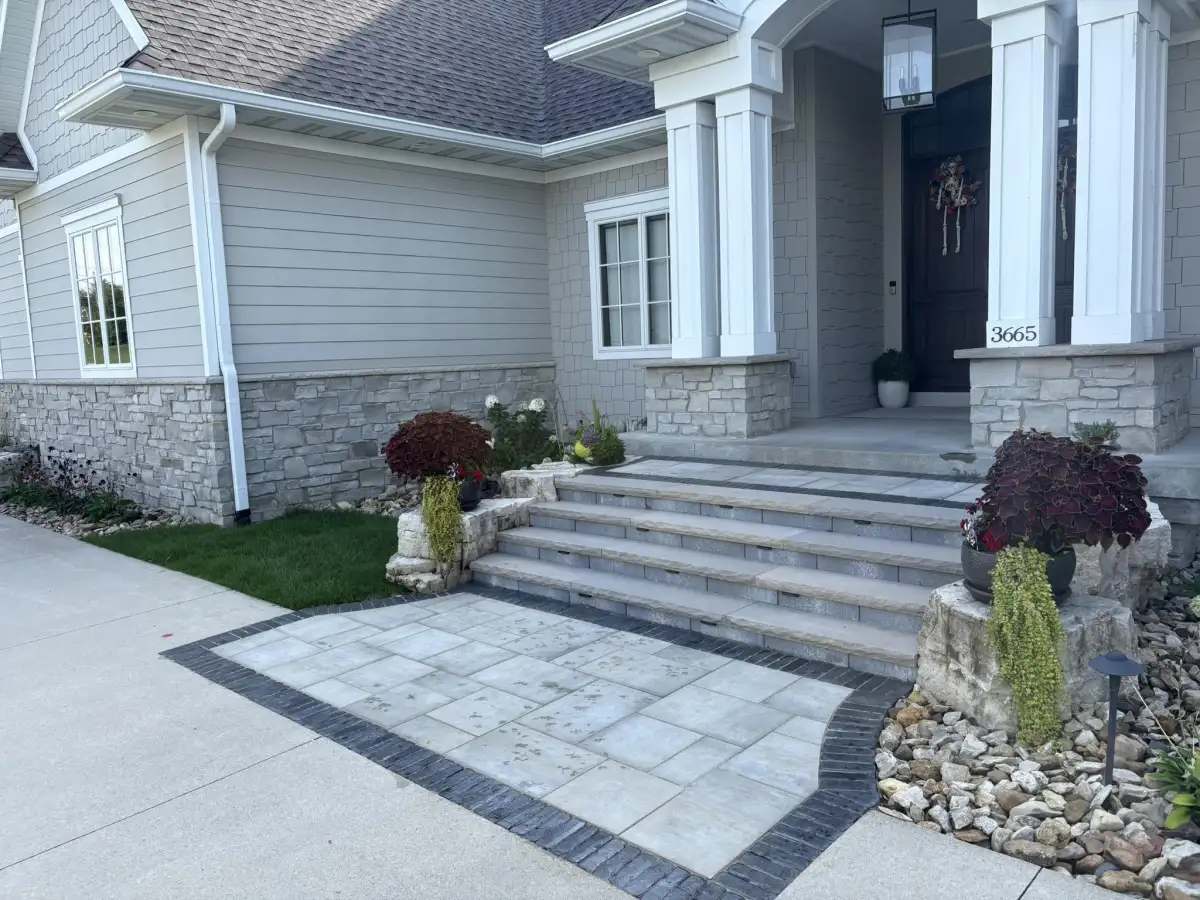
Before you book a landscaper, you should be able to explain more than the feature you want. You should know which type of service you are hiring, which property conditions influenced the recommendation, what the written scope covers, and what will still be your responsibility after the crew leaves.
That clarity is especially useful in Waterloo. A patio, retaining wall, planting plan, or lawn restoration can affect water movement, finished grades, access routes, and future maintenance. The questions below help you test whether a proposed project fits the whole property—not just whether the finished feature looks appealing.
1. Am I booking installation, design, or landscape maintenance?
“Landscaper” is a broad term. A property may need a one-time improvement, a design that coordinates several features, or ongoing care for established beds and plantings. Ask the contractor to name the service being proposed and where that responsibility begins and ends.
Matthias Landscaping distinguishes landscape installation and property improvements, landscape design, and Landscape Maintenance. If several areas need to work together, settle the overall plan before treating each feature as a separate job. That may prevent a later patio, wall, lighting route, or lawn repair from undoing work completed in the first phase.
2. Which site condition could change the project most?
Ask for the one or two site conditions that most influenced the recommendation. The answer may involve slope, low areas, downspouts, soil, existing roots, sun exposure, underground utilities, narrow access, or the distance between material staging and the work area. A useful answer connects a visible property condition to a preparation or design decision.
Water movement deserves attention before work alters grade or adds hard surfaces. The City of Waterloo provides stormwater information, and the Iowa Department of Natural Resources publishes statewide stormwater guidance. For your project, ask where rainfall currently travels, where it is intended to go afterward, and whether any site-specific requirements need to be confirmed.
3. Can I read the scope without filling in the blanks?
The written scope should let you follow the project from preparation to cleanup. Depending on the work, that may include removals, excavation, base or soil preparation, drainage components, dimensions, materials, plants, installation, disposal, restoration, and early-care instructions. It should also make exclusions visible.
Do not assume that a photo, material name, or square-foot figure explains everything. For a patio installation, for example, ask about base preparation, edge treatment, drainage, access, and restoration around the new surface. For a retaining wall, ask how height, soil pressure, drainage, excavation, and tie-ins affect the proposed approach.
4. What is driving the cost on this property?
Homeowners often ask whether an hourly price is reasonable or which part of landscaping costs the most. Neither question has a useful universal answer. Crew size, equipment, production rate, material quantities, disposal, access, preparation, and restoration all affect the total. An hourly rate alone does not show whether two companies are pricing the same work.
Ask which two or three items are the largest cost drivers in your plan. If the project exceeds the budget, discuss alternatives by outcome: reduce the area, change a material, simplify a detail, or phase a later feature. Cutting preparation or drainage just because those steps are less visible can create a false savings.
5. Which decisions must be final before booking?
Some projects can be estimated with a defined allowance; others need firm choices before the scope and price are reliable. Ask which dimensions, elevations, material families, plant quantities, colors, lighting locations, or restoration methods are already fixed. Then identify decisions that can still change the total.
This is a practical way to avoid a common landscaping mistake: choosing individual products before the layout, drainage, and use of the space are settled. The right sequence is usually to define the problem, understand the site, coordinate the plan, and then finalize materials that support it.
6. How will access, weather, and sequencing affect the schedule?
A booking date is only part of the schedule. Ask where equipment and materials will enter, what needs protection, whether fences or gates affect access, where materials can be staged, and which areas may be disturbed. Also confirm who handles personal items, private utilities, permits, or association approvals when they apply.
Iowa outdoor work can be affected by rain, saturated soil, freezing conditions, material availability, and the order of connected phases. Heavy construction and grading generally need to occur before final planting or sod installation and hydroseeding. Ask which milestones control the sequence and how schedule changes will be communicated.
7. What will the landscape require after installation?
Aftercare is not one generic instruction. New turf may need watering and traffic limits; plants need establishment care; hardscape surfaces and joints should be observed over time; and landscape lighting may need aiming adjustments as plants grow. Ask what must happen during the first week, the first month, and the first season.
Also ask who owns each task. If you plan to handle routine care, request clear instructions. If established beds, plantings, or seasonal work need professional attention, discuss whether Landscape Maintenance is a separate fit. The most overlooked maintenance task is often the one nobody realized they had agreed to manage.
A five-minute check before you sign
Read the proposal once more and make sure you can answer these points in plain language:
- Purpose: What problem or priority will the work address?
- Fit: Why is this service and approach right for the property?
- Scope: What preparation, installation, cleanup, and restoration are included?
- Variables: Which choices or hidden conditions could change cost or timing?
- Handoff: What care begins after the final walkthrough, and who is responsible?
If one of those answers is missing, ask for clarification before booking. You can also review Matthias Landscaping’s Waterloo service-area guide, browse completed landscape and hardscape work, or read the guide to comparing landscaping proposals.
FAQ: Questions for a Waterloo Landscaper
What should I ask a landscaper before booking?
Ask which service fits the need, what site conditions affect the recommendation, what the written scope includes, which selections can change the price, how access and scheduling will work, and what care is required after installation.
Is an hourly rate the best way to compare landscapers?
Not by itself. An hourly rate does not show crew size, equipment, material quantities, preparation, disposal, restoration, or the total time required. Compare the complete scope, assumptions, and expected result.
What is often the most expensive part of landscaping?
There is no single answer for every property. Excavation, base preparation, drainage work, access limits, material quantities, walls, patios, and restoration can all drive cost. Ask which conditions are the largest cost drivers for your specific plan.
What landscaping issue do homeowners commonly overlook?
Water movement is easy to overlook because the visible goal may be a patio, bed, wall, or planting. Before work changes grades or adds hard surfaces, ask how runoff, downspouts, low areas, and neighboring drainage will be considered.
Ready to discuss your property? Contact Matthias Landscaping Co. with the area you want to improve, the problem you want to solve, and your preferred timing, or call (319) 226-6000.