
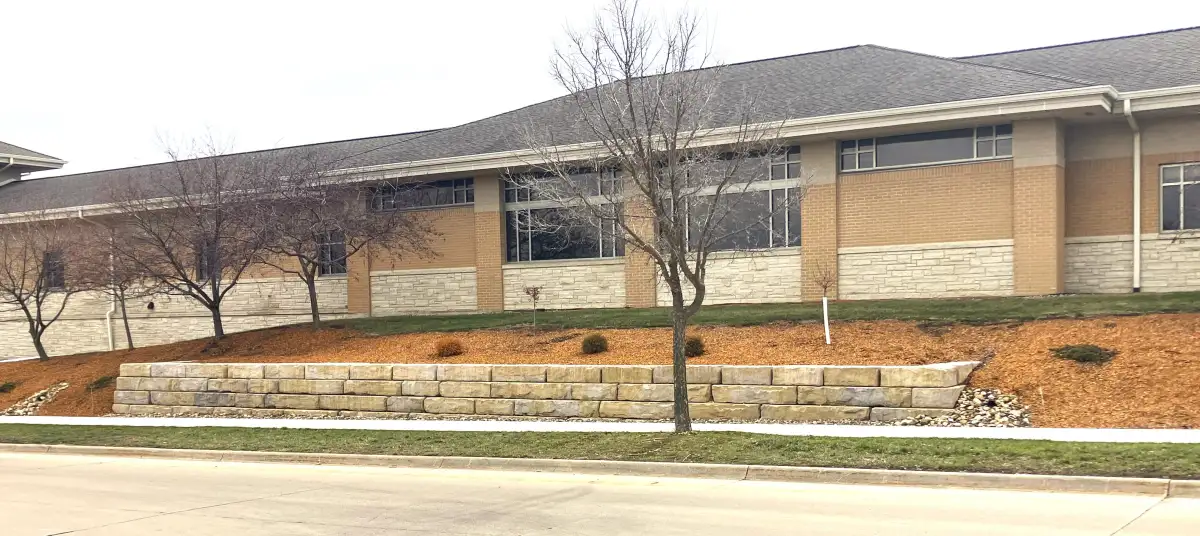
Retaining Wall Installation in Waterloo, IA
Structural and decorative retaining walls that solve grading problems, prevent erosion, and create usable outdoor space on sloped Cedar Valley properties.
Schedule a ConsultationSolving Iowa's Grading and Erosion Challenges
Retaining walls are one of the most important structural elements in landscape construction. They hold back soil on sloped lots, redirect water drainage, prevent erosion, and create level terraces where you can build patios, plant gardens, or simply reclaim usable yard space. In the Cedar Valley, where clay-heavy soils expand when wet and contract when dry, retaining walls face unique engineering demands.
Matthias Landscaping Co. has been building retaining walls across Waterloo, Cedar Falls, and the surrounding area since 1991. We understand Iowa's soil conditions, drainage patterns, and frost line depth — and we engineer every wall accordingly. From a short decorative border wall to a major structural installation holding back several feet of earth, our team handles the excavation, drainage, reinforcement, and finish work needed for a wall that performs for decades.
Each retaining wall project starts with a thorough site evaluation and a custom 2D design plan. We assess the grade, measure the soil conditions, and determine the engineering requirements before recommending materials, heights, and drainage solutions.
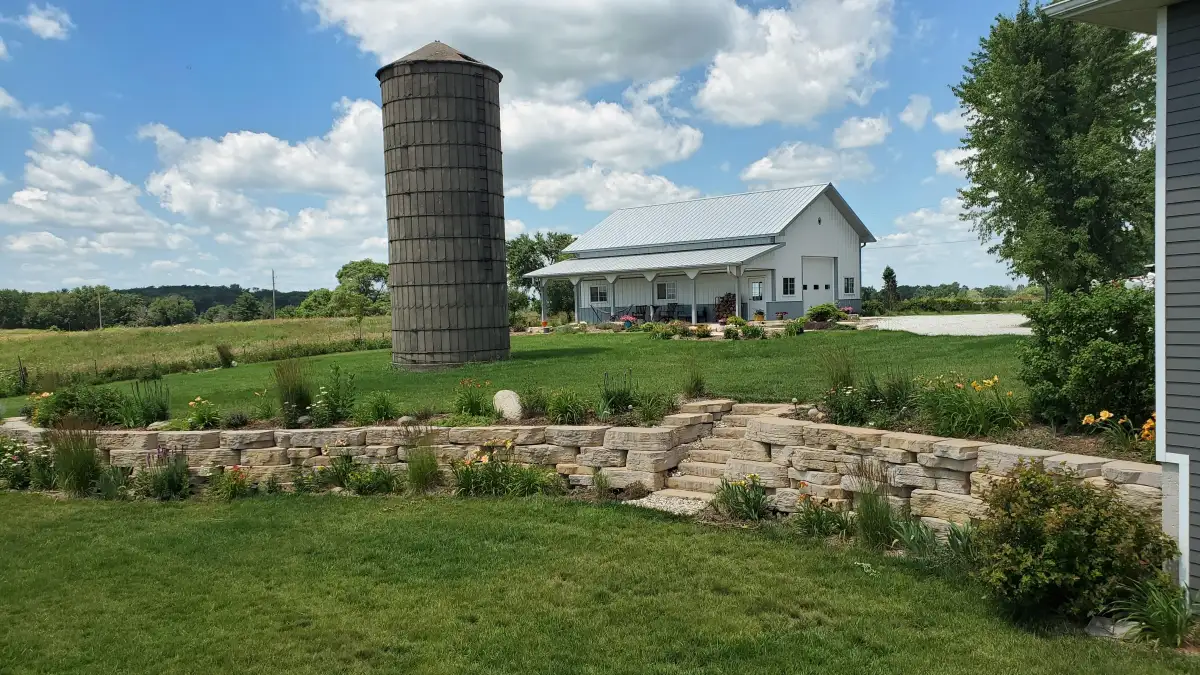
Retaining Wall Materials We Install
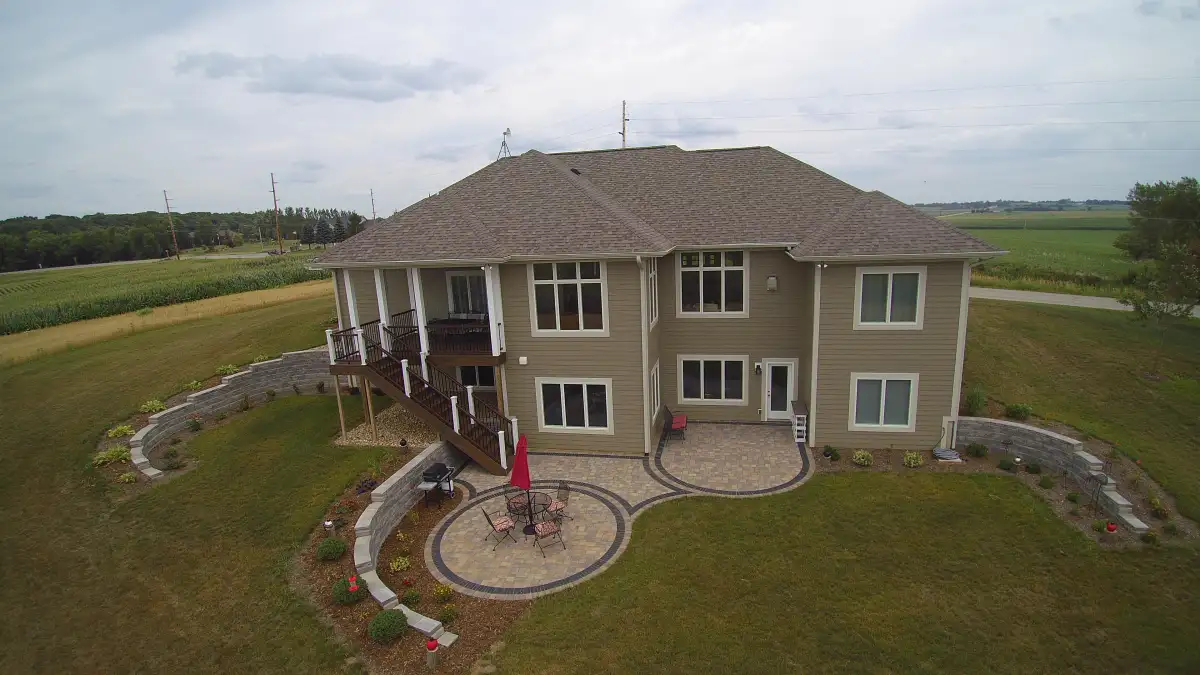
Segmental Block
Manufactured segmental retaining wall blocks are the most common choice for residential projects. They interlock mechanically, require no mortar, and come in a wide range of colors and textures. For walls over four feet, we install geogrid reinforcement layers that anchor the wall into the retained soil for structural integrity. Brands like Rosetta and Belgard offer natural stone textures with the consistency of manufactured block.
Why Iowa Soil Makes Drainage Critical
The Cedar Valley sits on clay-dominant soil that behaves very differently from the sandy or loamy soils found in other parts of the country. Clay soil absorbs and holds water, expanding significantly when wet and shrinking as it dries. This cycle creates hydrostatic pressure behind retaining walls — the leading cause of wall failure.
Every retaining wall we build includes a drainage system designed to relieve this pressure. We install perforated drain tile wrapped in filter fabric at the base of the wall, backfill with clean crushed stone to create a drainage channel, and ensure proper outlet points for water to escape. For taller walls, we also add weep holes and surface drainage to manage heavy rain events.
This is the difference between a wall that lasts five years and one that lasts fifty. The materials you see on the surface matter, but what happens behind the wall — excavation depth, compacted base, drainage stone, geogrid reinforcement — is what determines long-term performance in Iowa's conditions.
How We Build Retaining Walls
Site Assessment
We evaluate the slope, soil type, drainage patterns, and any existing structures. We measure the grade change and determine the engineering requirements for your wall.
Design & Engineering
Our team designs the wall layout, selects appropriate materials, and plans the drainage system. Walls over four feet include geogrid reinforcement specifications. You review and approve the plan.
Construction
We excavate to the required depth, install a compacted aggregate base, build the wall course by course with proper setback, and install drainage behind each layer. Backfill is compacted in lifts.
Completion
We install cap stones, grade the surrounding area for proper drainage, clean the site, and walk through the finished project with you. The wall is ready to serve your property for decades.
Retaining Wall FAQ
Single retaining walls can be built to significant heights depending on the material and engineering. Segmental block walls with geogrid reinforcement can reach six feet or more.
Absolutely. Drainage is the single most important factor in retaining wall longevity. Without proper drainage, water builds up behind the wall and creates hydrostatic pressure that can push the wall forward, cause it to lean, or even collapse.
Yes — that is one of the primary purposes of retaining walls. A properly designed retaining wall (or series of tiered walls) converts a steep, unusable slope into level terraces. These flat areas can then be used for patios, play areas, gardens, or simply level lawn space. Many Cedar Valley properties were built on rolling terrain, and retaining walls are the most effective way to reclaim that space for practical use.
A retaining wall alone may not solve a basement water problem, but it can be a critical part of the solution. By regrading the area behind the wall and installing proper drainage, we can redirect surface water and subsurface moisture away from your foundation. Combined with downspout management and proper grading, a retaining wall system can significantly reduce water infiltration around your home's foundation.
Related Services
Need a Retaining Wall on Your Property?
Whether you need erosion control, yard leveling, or a decorative terrace, our team has the experience to design and build the right wall for your property.
Schedule a Consultation